
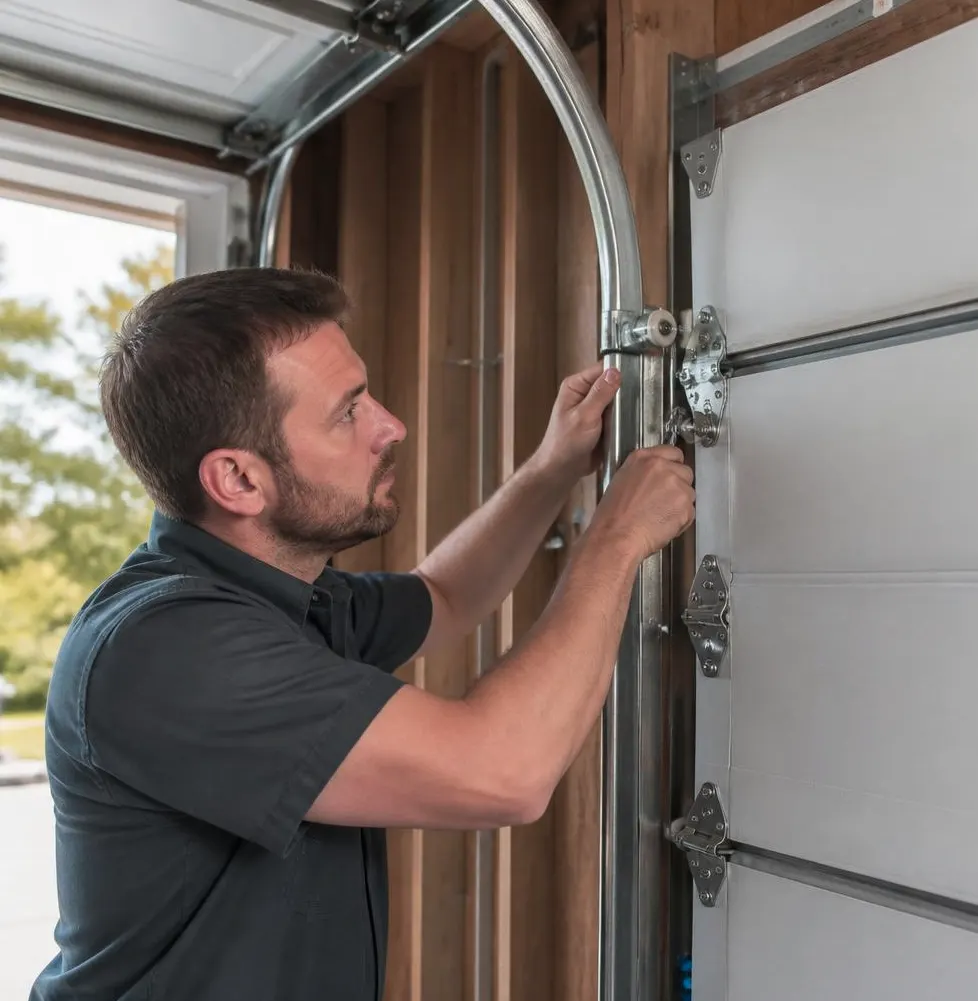
The Mistake Most People Make First
The door won't lift, so the natural move is to hit the opener button again. And again. Then maybe climb out, grab a flathead screwdriver, and try to pry the bottom seal loose from the concrete. It feels productive — you can see the ice, you can see where it's stuck, so prying seems like the fix.
It isn't. Repeated opener cycles when the door is genuinely stuck put strain on the drive gear, the trolley, and the torsion springs all at once. The opener is built to move a door that can move. If the bottom is frozen to the slab, each press is just loading force into parts that were never designed to fight a frozen seal. Prying with a screwdriver often rips the weatherstripping or chips the concrete edge, which creates a bigger gap for water to pool in next time.
The better first move is simple: stop pressing the button, and look at what's actually happening before you touch anything.
What You'll Notice
- The door won't lift at all — the opener hums, clicks, or strains, but nothing moves.
- The door lifts partway then stops, sometimes reversing back down.
- Movement is slow and jerky instead of the usual smooth glide.
- You hear a cracking or tearing sound right as it breaks free — that's the ice seal letting go, not the door itself failing.
- The opener's remote or wall button seems unresponsive, even though it worked fine the day before.
None of these symptoms tell you the cause on their own. That's why a technician works through them in a specific order, starting with the simplest and most common.
1. Ice Sealing the Bottom to the Slab
This is the first thing checked, because it's the most common cause by far after a freeze. Rain or condensation sits under the bottom weatherstripping, the temperature drops overnight, and the rubber seal freezes flat against the concrete like a tray stuck to a freezer shelf. The door isn't broken — it's glued down by ice.
The fix is patience, not force: a plastic scraper or a dull putty knife run gently along the seal line to break the bond, or warm (not boiling) water poured along the edge and left a few minutes to soften the ice before trying the opener again. Boiling water can crack cold concrete or warp vinyl seals, so lukewarm is enough.
2. Stiff or Rusted Rollers and Hinges
Next, a technician checks the rollers and hinges themselves. Lubricant that was fine in August thickens in cold weather, and any moisture that worked into the roller bearings over a humid fall can freeze solid overnight. The door technically isn't stuck to the ground in this case — it's just dragging at every hinge point, which is why it moves in that jerky, stop-start way instead of stopping dead.
The fix is a proper garage-door-specific lithium or silicone lubricant applied to rollers, hinges, and the track, not WD-40 or household oil, which attracts dust and grit and gums up again faster. This is a five-minute job but it needs to happen before freeze-thaw cycles turn surface rust into pitted rollers that need replacing.
3. Spring Tension Shifting With the Cold
If the seal is clear and the rollers move freely but the door still feels heavy or stalls halfway, the springs come next. Metal contracts in cold weather, and torsion springs that were already near the end of their life cycle can lose just enough tension that the door, which the opener was calibrated to lift in warmer conditions, suddenly feels too heavy for the motor. This shows up most in homes with older doors or springs that have already logged several years of daily cycles, which is common on garages that catch a lot of humidity and pine debris through the warmer months.
This isn't a DIY adjustment. Torsion springs are under enough tension to cause serious injury, and a spring that's marginal in November is often one cold snap away from snapping outright. This is where spring replacement gets scheduled rather than patched.
4. Opener Force Settings and Sensor Issues
If the door is physically free and balanced but the opener still struggles or reverses, the next check is the opener itself. Cold can affect the photo-eye sensors near the floor, especially if condensation or frost forms on the lenses, causing false reversals. The opener's force setting, which tells the motor how hard to push before it assumes something's blocking the door, can also be miscalibrated for the added resistance of a cold, stiffer door. The fix here is cleaning the sensor lenses and confirming alignment, then checking that force settings are appropriate rather than cranked up to compensate for a problem that's actually mechanical.
5. Track Alignment and Worn Weatherstripping
Last on the list, because it's the least common cause but still worth ruling out: metal tracks contract slightly in cold weather, and if a track was already a little bent or loose at the brackets, cold weather can expose that misalignment in a way that wasn't noticeable in summer. Cracked or brittle weatherstripping that's lost its flexibility can also drag or catch on the threshold. Both are visual checks — a technician sights down the track for gaps or bowing and inspects the seal for stiffness or tearing.
When to Call Spring Lake Garage Door
If warm water and fresh lubricant clear things up and the door runs smoothly afterward, you've solved it. But if the door still feels heavy, stalls, or reverses after the ice is gone, stop running the opener and call. Our technicians check this same list in person, starting with a balance test on the springs and a full inspection of the rollers, track, and opener settings, and can usually tell within minutes whether you need spring replacement or just a maintenance visit to get lubrication, sensors, and alignment squared away before the next freeze.
If your garage door is sluggish, frozen, or just not acting right as the cold sets in, call Spring Lake Garage Door. We serve homeowners throughout Spring Lake, NC and the surrounding Fort Liberty area, and we'll get it diagnosed and fixed right the first time.