
Rule of thumb: do it before the first hard freeze, not after
If you winterize your garage door before the first real cold snap hits, you'll avoid almost every emergency call that comes in between now and March. That's the short version. The exceptions matter, though: if your door has been dragging, squeaking, or hanging unevenly all fall, don't wait for a seasonal checklist — get it looked at now, because cold weather makes existing problems worse, not better. The same goes if you've had standing water near the slab after heavy rain, or if your opener already struggles on humid days. Those aren't winter problems waiting to happen; they're current problems that winter will expose.
Why this stretch of NC is harder on garage doors than people think
Spring Lake doesn't get brutal winters, but it gets a strange mix: humid air lingering from a hot summer, heavy rain from hurricane remnants moving inland, the occasional ice storm, and pine needles and moisture collecting around garage slabs and tracks. That combination of wet-then-cold is tougher on hardware than steady cold ever would be. Metal that's been sitting in humidity all summer rusts quietly, and you don't notice until the first freeze makes everything stiff and loud at once.
1. Check the weatherstripping along the bottom and sides
Pull back the rubber seal at the base of the door and look for cracking, flattening, or gaps where it's pulled away from the panel. Humidity and pine sap break this material down faster than people expect, and a gap you can see daylight through in November is a gap that lets in cold air, blowing rain, and eventually ice buildup in January. Replacing weatherstripping is a low-cost job most homeowners can do themselves with a utility knife and a new strip from a hardware store.
2. Lubricate moving parts before the cold sets in
Hinges, rollers, and the torsion spring itself all move more stiffly in cold temperatures. If they're dry or rusty going into winter, that stiffness turns into grinding, popping, or a door that struggles to open smoothly on a 35-degree morning. Use a silicone-based garage door lubricant — not WD-40, which attracts dust and grit — on hinges, rollers, and the spring. Do this in the fall rather than mid-winter, since it's easier to work with a door that isn't already fighting you.
3. Inspect the springs for wear, not just function
A spring that's been slowly weakening all year tends to fail in cold weather, because cold metal is less forgiving and the extra tension required to lift a door against stiff, dry hardware pushes it over the edge. Look for visible gaps in the coil, flat spots, or rust streaks. If the door feels noticeably heavier than it used to when you lift it manually (with the opener disconnected), that's a sign the spring is losing tension — not a sign to crank anything yourself. Spring replacement is not a DIY repair; the tension involved can cause serious injury.
4. Think about insulation if your garage shares a wall with living space
With the swing between hot, humid summers and the occasional hard freeze, uninsulated garage doors can contribute to condensation problems inside the garage — moisture forms on the cold metal panel when warm, humid indoor air meets it. If you've noticed dampness or light rust forming on the inside of your door panels, an insulated door or a retrofit insulation kit can cut down on that condensation significantly, and it'll also keep the space more comfortable if you use the garage as a workshop or storage area.
5. Tighten hardware that rain and humidity have loosened
Go around the track brackets, hinges, and the opener's mounting bolts with a wrench. Humidity and vibration from regular use gradually loosen bolts over a season, and a bracket that's slightly loose in October can be rattling or pulling away from the frame by January, especially if ice storms bring wind-driven stress on the door. This is a ten-minute check that prevents a much bigger repair.
6. Plan for power outages before an ice storm, not during one
Ice storms in this area aren't common, but they happen, and they take out power. If your opener doesn't already have a battery backup, consider adding one — it's a modest investment that means you're not stuck manually hauling a heavy door open during a storm. At minimum, know where your manual release cord is and make sure it isn't painted over, rusted, or buried behind stored items.
When to call Spring Lake Garage Door
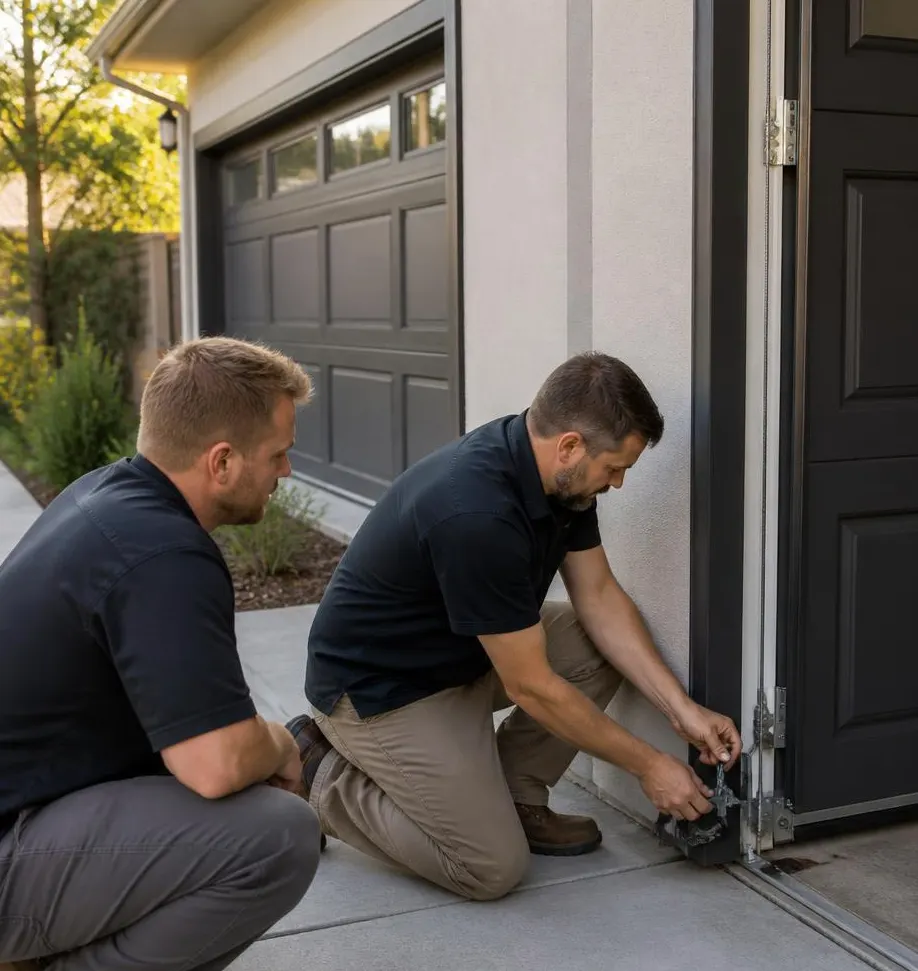
If you've gone through this list and found a spring that looks worn, a door that's noticeably heavier to lift, or an opener that hesitates or reverses unexpectedly, those aren't things to leave until spring. Our team handles garage door maintenance visits that cover lubrication, hardware tightening, and a full inspection of springs, cables, and rollers — the kind of once-a-year tune-up that catches small issues before a cold snap turns them into a stuck door. We also handle spring replacement for homeowners throughout Spring Lake, Fayetteville, and the Fort Liberty area, using the right tension and gauge for your specific door rather than a one-size-fits-all part.
If your door is already acting up — grinding, uneven, slow to respond, or visibly sagging on one side — don't wait for the weather to make it worse. Call Spring Lake Garage Door today and we'll get a technician out to take a look before winter puts more strain on it.